Managing Holiday Stress

November 14, 2025 | Karis Rodila, LPC, LMFT

Managing Holiday Stress

A Therapist’s Guide to Thriving in the Holidays

Oh, it’s the holiday family madness, 
Equal parts joy and sadness, 
Every single year! 
You laugh, you cry, you’re stressin’, 
But somehow count your blessin’s, 
For the ones you hold so dear! 

It is the most wonderful time of the year! There is so much to be grateful for and so many fun things to anticipate. At the same time, the holidays bring a lot of busyness, stress, and even grief that can be difficult to navigate. Not to mention the strain that the holidays can put on relationships with the intricacies of differing political or religious beliefs, complicated family history, or financial stresses. In this blog post, I am going to outline some strategies to thrive this holiday season, instead of just surviving. 

Unwrap Your Feelings

The holidays can be an emotionally charged time of year. It can be difficult to slow down and be with our emotions in the normal day-to-day, but around the stress of the holidays, it’s even more of a challenge. However, if our emotions are not cared for, they can come out at the most inopportune times (Hello, fights over Thanksgiving/Christmas dinner!). It’s important to reflect on what we are experiencing and seek to regulate our emotions.  

Notice, Name, and Normalize

We can do this by first practicing awareness. When we notice a strong sensation in our body, it can be helpful to take a pause to reflect on what emotion we are feeling. This serves to kick-start the process of emotional regulation. Then, we need to put a name to the sensation. Naming what we are feeling can decrease how intensely we feel the emotion. Next, normalizing our experience helps to lower our emotional activation further.  

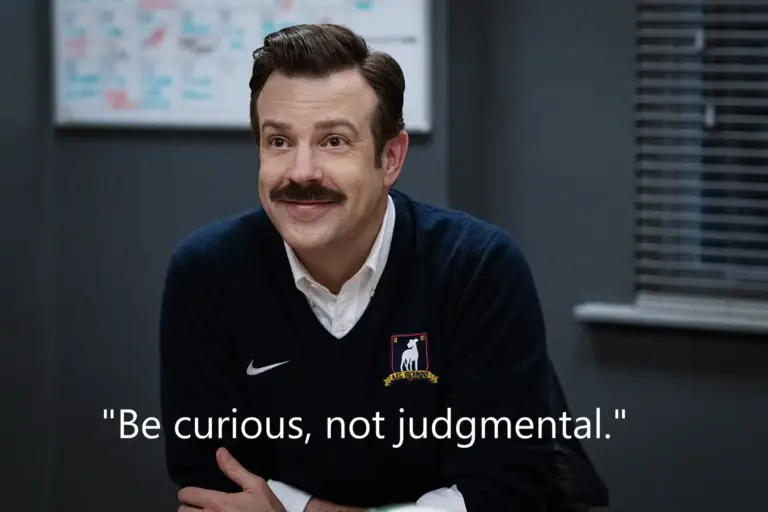
A simple example of naming and normalizing is, “I feel stressed about finances surrounding the holidays, and that makes sense. Anyone in my position would feel the same way.” Seek to be curious about your emotions and your experiences. The holidays can be a triggering time, and we need gentleness, not judgment, in navigating the things that come up for us. 

What's Mine vs. What's Yours

When the emotions of others start to impact us, it can be difficult to separate ourselves from those feelings. We are around a lot of people during the holidays, and there will likely be moments of conflict or high emotional activation. It’s important to remember that the other person’s emotions are not our responsibility, and we don’t have to let their “bad mood” impact our “good mood.”  

This is what we call differentiation. It’s a therapeutic term that means having a distinct sense of self that is separate from others, while still maintaining a healthy connection to others. With my clients, I like to talk about loving detachment, meaning that I can love someone while also having boundaries around my emotional responses to their distress or dysregulation. I like to think of Phoebe’s line from the show, Friends, (Season 1, Episode 2: “The One with the Thumb”) where she says, “Not mine. Not mine.” It helps to remind me that others feelings and experiences are not my responsibility to fix. Letting go of the things that aren’t in our control is scary and freeing. 

Deck the Halls, Not Your Stress Levels

As I’ve already said, the holidays can be stressful with all of their hustle and bustle. It’s important to find healthy ways to manage our stress, especially during this time of year. Some important areas of focus for managing stress are getting adequate rest, using healthy coping skills, and having safe people in our support system. 

All I Want for Christmas is a Nap

Rest is an important aspect of self-care and stress management. Having a healthy sleep routine can help lower stress levels and provide energy for the tasks of the day. This is basic, yet it can be easy to forget how important good sleep is. Try to set boundaries around screen use in the evening and set up a nightly routine that could involve self-care hygiene practices and basic bedtime tasks. It can also be helpful to set aside one day a week for rest and restoration rather than more errands and busyness. 

Fa-la-la-la Ahhh...

Healthy coping skills are another great tool for regulating our stress/emotions. This can involve exercise, journaling, and breath work. A breathing technique you might try is 4-7-8 breathing. You breathe in through your nose for a count of 4, hold that breath to a count of 7 (hold it for less time if 7 is not sustainable for you), and then exhale for a count of 8 by blowing the breath out like youre blowing out a candle. Repeat until you feel calmer.  

Good coping skills can also include grounding and mindfulness practices. Grounding is anything that helps you to be more present. I like to divide grounding techniques by the five senses. So, touch something pleasant, smell an enjoyable scent, listen to music that changes or matches your mood, taste a treat you like, and look at something calming or beautiful. Be creative in what healthy coping skills help you.  

May Your Support System be Merry and Bright

Identifying safe people in your life to support you is a good way to manage holiday stress. A safe person is characterized by how trustworthy they are and how well they handle your emotions. They have the ability to be with you in your stress without rushing to fix it for you. Safe people provide a space to vent, seek encouragement, or ask for their opinion on how we are showing up in the situation. This support is even more helpful when it’s a two-way street. When you have the chance to be a safe person for someone else, not only is it beneficial for them, but it also gives you a mental break from your situation for a little while.  

The Gift of Boundaries

Because of how much social interaction is baked in, the holidays are a great time to review and practice the concept of setting boundaries. There are many expectations during this time of year, from time together, taking part in traditions, and providing food and gifts for the people we love. At the same time, these good things can start to feel like obligations when we think we “have to” say “yes” to everything. This can lead to feelings of resentment, which impact the way we show up with others.  

It’s important to practice awareness of where we may feel resentment or stretched too thin. These are often the first indicators that boundaries are needed. Remember that boundaries are “the distance at which I can love myself and the other person simultaneously.” They are not to punish the other person or manipulate them into doing what we want. They are for us to have the space to care for ourselves and the relationship.  

Have Yourself a Healthy Little Boundary

Time with loved ones is extremely important, especially around the holidays. Nevertheless, if that time together is marked by quiet resentment, passive-aggressive behavior, or even explosive conflict, that’s not good for the relationship either. It is better to have boundaries than to damage the relationship with our resentment and anger. Think through your boundaries around: 

  • the amount of time you spend with people who are challenging for you
  • what events you say yes to
  • how much you spend on food and gifts

It is also valid to set boundaries and expectations about protecting time for us and our families. Whether you are single, married, or have children of your own, it is important to protect that “oneonone time” if it’s something you value. Boundaries in this instance may look like:  

“We are not going to travel to anyone’s house on Christmas morning because we want to have that time with [our family]. We would love to spend time with you before or after that day, but will be unavailable on Christmas Day.”  

This is a boundary that is 100% in your control, even if others disagree.  

Sleigh Your Spending

Everything is more expensive today than it was last year. Finance is often a significant source of stress in day-to-day life, and that stress only seems to grow with the holidays. With so many events to attend, food to provide, and presents to buy, it can feel like we are working with a “shoe-string budget.” It can often be tempting to overspend and not worry about the bills until the new year. However, this solution doesn’t actually solve the problem; it just kicks it down the road. Here are a couple of tips to manage your money well during the holidays. 

  • Set a budget and stick to it. Plan how much you will put towards each person or event on your list and do your best to not spend above what you planned.
  • Give homemade presents instead of store-bought ones. Some homemade presents require more craftiness than others, but there are plenty of options out there for any skill level. Cater to your strengths, and where possible, buy supplies in bulk to save more.
  • Focus on experiences, rather than things. Maybe buy fewer presents this year and get a craft that everyone can do together. Or you could drive around the neighborhood together looking for the best decorated house. Bring along snacks and a thermos of hot chocolate, and don’t forget your favorite holiday music. Focus on traditions that are high in relationship value, but low in financial cost. Get creative! (For more ideas, check out this list of Free and Low-Cost Holiday Activities.)

Finance can be stressful, and with some creativity and foresight they don’t have to take away from our holiday celebrations.  

Tidings of Comfort and Joy

My final thought for ways to thrive this holiday season is the idea of “taking in the good.” This concept comes from Rick Hanson’s book, Hardwiring Happiness.  I like to say, “What you focus on, you amplify,” meaning that what gets our attention becomes stronger. So, if we focus on the stress, annoyance, or frustrations of the holiday season, that is what we will notice more quickly and feel more deeply. However, if we focus on taking in the good, positive things about this season, we will more easily find them and feel better overtime. This doesn’t mean ignoring the bad things (see above on unwrapping your feelings). Instead, it’s about finding a better balance in what we give our attention to.  

To “take in the good,” we must first practice awareness of the possible good things happening around us. Maybe we notice what it feels like to be with the family members we love or the smell of grandma’s cooking or the laughter coming from the children playing games. When we find something that feels uplifting or good to us, we focus on it, seeking to enhance the experience with our attention.  

We can also practice gratitude, noticing and giving thanks for the things in our lives. Research shows that even the act of looking for things to be grateful for can improve our mood and decrease stress. It seems like such a small thing, but our brain is powerful, and what we give our attention will influence how we feel. 

Final Thoughts and a Farewell to the Year

The holiday season brings its own unique stress, grief, and busyness. However, with the right tools, we can navigate this time of year well and find enjoyment in it. For a more indepth look at some of the concepts mentioned in this blog, check out our other posts from earlier in the year. Blogs such as “The Importance of Feeling Your Feelings,” my post on “Boundaries are Love: For Yourself and Others,” and Kiki’s on “Content vs. Meaning-Making,” could all be helpful. They provide more detailed tools and resources for navigating the holidays and the new year in healthy ways. Until next year, Merry Christmas and Happy Holidays from us at Waystone Therapy Center!  

Learn what happens when we don’t feel our feelings, and practical techniques for letting ourselves “go there”.

Discover what boundaries are (and aren’t!) and how to implement them to protect yourself and others.

Learn about the two layers of communication and how to attend to the deeper level that often gets missed.

Karis Rodila, LPC, LMFT

Karis Rodila studied psychology at Berry College and received her Master’s in Marriage and Family Therapy from Richmont Graduate University. She specializes in working with adolescents (16+) and adults navigating different life circumstances like trauma, anxiety, depression, life transitions, relationship challenges, and more. Karis works with individuals as well as couples, and she is passionate about coming alongside her clients to help them discover their personal power. In her free time, she enjoys drinking coffee, spending time with her friends, and reading books by her favorite author, Brandon Sanderson. Disclaimer: If you ask her about Sanderson, be prepared for a lengthy and impassioned conversation!


Communication is Key

September 29, 2025 | Karis Rodila, LPC, LMFT

Communication is Key

We’ve all heard the saying, “Communication is key.” I know I heard it many, many times when I was getting married. It’s the guidance you almost always hear when you ask, “What’s your advice for a good marriage?”  But what does this statement really mean? What makes communication healthy and effective in any relationship?  

Communication is Hard

I want to acknowledge at the outset of this blog post that communication is difficult, as is communicating about communication. Plus, there is so much to say – I won’t be able to cover all that you need to know in one article. The aim of this blog post is to give you a 10,000-foot view of some of the skills needed to have healthier, more effective conversations.

Tools for Effective Communication

Be Curious, Not Judgmental

I’ll admit that I was a little late to the Ted Lasso bandwagon, but wow! Since I’ve watched it, it has quickly become one of my favorite shows. Now why am I bringing up Ted Lasso in a conversation about communication? Because of a scene in Season One where Ted says a profound line: “Be curious, not judgmental.” Walt Whitman was the first to say it, but I always hear it in Ted’s Kansas drawl. 

Curiosity opens the conversation, while judgment is the surest way to shut everything down. When we feel judged by someone, we no longer feel safe to share the deeper parts of ourselves and our experiences. But when someone approaches us with curiosity, we have the space to open up, explore our experiences, and develop a stronger relationship with the other person. In the same way, our curiosity towards others helps us to be more emotionally regulated and protected against all-or-nothing thinking. 

GIF: Ted quoting Walt Whitman in Ted Lasso, Season 1, Episode 8, “Diamond Dogs”, via AppleTV+

Curiosity in Action

Say a friend isn’t as responsive or engaged as they typically are. If I were in a judgmental place, I could make the meaning that I did something wrong and they’re mad at me. Or I could blame them, thinking that they are a bad friend. However, when I am seeking to practice curiosity, I like the phrase: “I noticed ______, and I wonder ______?” That could look like: “I noticed that my friend isn’t responding like they normally do. I wonder if there is something going on for them that’s getting in the way of their ability to be present with me?” 

From this perspective, I can then approach that friend from a calm, compassionate, and curious place. If you dig even deeper, you might realize that the message of being unimportant is significant to you. Perhaps, growing up, your dad was so busy with work that he was perpetually late to your baseball games, orchestra concerts, etc. You felt unimportant back then, and that was a painful experience, especially connected to your parent(s). Now, when people are late, it’s a button for you – you make meaning about their lateness. You translate it into, “I’m not a priority to you; you don’t really care about me.” 

Clear is Kind

My friend and I constantly tell each other, “Clear is kind.” This phrase means that we intend to be direct and explicit in expressing our feelings, experiences, and needs. In other words, we say what we mean and mean what we say. Being clear and direct ensures that we don’t fill in the gaps with our own assumptions. This helps to cut down on miscommunication and grows trust as we are transparent with each other. 

Healthy, “clear is kind” communication looks like assertiveness. Assertiveness is the ability to calmly and confidently state your opinion, belief, want, need, or experience. It is an empowered stance where you honor your thoughts, feelings, and needs. Bonus: it also gives the other person the best chance to understand your experience and meet your needs to the best of their ability. 

Passive, Passive-aggressive, and Aggressive vs. Assertive Communication

Unhealthy types of communication include passivity, passive-aggression, and aggression. When speaking aggressively, volume, tone, and the words chosen are meant to scare or force someone into agreement. Passive and passive-aggressive communication are both forms of indirect communication regarding your negative feelings or experiences. Passive communication often means a lack of talking about your feelings, experiences, or needs. This leads to a lack of authenticity. It could also be indicative of conflict avoidance or people-pleasing tendencies. With passive-aggressive communication, you might be trying to manipulate the other person into complying without being direct about your wants and needs. 

For example, say I wanted a friend or partner to prioritize time with me. However, I verbally lashed out and demanded that they change their behavior. With this approach, I am doing damage to the relationship. Conversely, if I use “the silent treatment” or passive-aggressive comments about the lack of time together, I am unlikely to get the response I desire. Why? Because the other person has little to no idea what’s wrong!

If I am clear and assertive about my desire for time together, I am more likely to receive the response I want. Assertiveness can look like, “I’ve been feeling a bit disconnected in our relationship recently, and I would like to spend more time with you. Could we take a few minutes to find a time that works for both of us and plan an outing together?”   

“Cue” Them In

Another tool that I really love when it comes to effective communication is the use of cue words or phrases. A cue word or phrase allows a lot of meaning without having to say or explain too much. They are most effective when both people have discussed what the cue is and its meaning during a time of calm. This way, both parties are on the same page when the cue is called during more heated moments. Some examples of cues that I use with clients are:

  • “Pause,” meaning: “I am getting reactive and don’t want to show up in hurtful, unhealthy ways. So instead of continuing to talk, I am asking us to stop before damage is done. Let’s take a little while to take care of our hearts so our conversation will be productive later. I am committing to talking again later.”
  • “This is what my brain is telling me,” meaning: “I am feeling a little triggered right now and am having unrealistic thoughts about this situation. I know it isn’t true, and I need some reassurance/explanation of what was going on for you.”
  • “Oklahoma” (Another Ted Lasso reference, anyone?), meaning: “I want to hear the God’s honest truth from you.” (First seen in Season 1, Episode 5.)

A cue word or phrase can literally be anything as long as both people understand the meaning behind it. I believe that humor is a significant healing factor and emotional regulation skill, so get a little silly with your cues! It can reduce the tension and allow for better communication going forward.

Know Thyself

Effective communication comes from an awareness of yourself: what you are feeling, thinking, want, and need. Seek to practice awareness of your experience. Own your part of the conflict or what is in your power and control in the relationship. And, attend to your feelings. If you can process your feelings and experiences in healthy ways, you will be more able to communicate from a regulated and empowered place. A handout like The Five A’s can help you process your heart prior to communicating your feelings and experiences to someone else.

“Line, please?”

Don’t you wish there was a script for life sometimes? That when we feel stuck or unsure we could call out, “Line, please?” and someone off to the side will helpfully fill in what we should say next? It can often feel like we don’t know how to express ourselves in a way that will be understood. This is why having a formula, like the Speaker Listener Formula, can be so helpful. It gives us the structure we sometimes need to effectively communicate what we are thinking, feeling, and experiencing. 

To use this “script” most effectively, you must first make sure that you are in a regulated place. You can use breathing techniques like box breathing or 4-7-8 breathing to calm your body and brain. The next step is to process what your responsibility is in the current conflict or conversation. Then you can reflect on your experience of the conflict/conversation and formulate what you want to communicate to the other person about said experience. 

Here's a Simple Script:

“I felt ___(insert emotion/ feeling word)___ when or about ___(the situation)___, because the message I received was _____. And I know that’s not your heart. Can you help me understand so we can work together on a solution to this conflict?” 

So, going back to our earlier example about the friend who has been distant, here’s how I would communicate about that experience:

“Hey! Is now a good time to talk about something I’ve been experiencing in our friendship? I felt distant and sad when I perceived you not being as responsive as you typically are, because the message I received was that I’m not important to you. And I know that’s not your heart. Can you please help me understand what’s been happening for you recently?”

Notice that in my example, I’m using “I statements.” This is a way of giving the benefit of the doubt that my perception might not match the other person’s experience. Acknowledging this can help them not be defensive from the start of the conversation. It is also owning my feelings and experiences without blaming or shaming the other person.

Now, it’s going to feel weird and maybe robotic to talk this way at first. But keep at it! It will get more natural with time, and you’ll see your communication improve.

Be Active! (In Your Listening)

Make sure that after expressing your thoughts, feelings, and experiences, you leave room for the other person to share theirs. Our goal in communicating anything is to be heard and understood. And our goal in listening is to understand the other person, not to prepare our responses. When listening to understand, it’s helpful to practice curiosity by looking for the deeper emotions underneath the content.

In therapy, we use what’s called “active listening,” which is a way of summarizing and reflecting what you heard the other person say in your own words. You don’t want to “parrot back” word-for-word what they said. Sometimes the same words mean different things to different people. So, reflecting what you heard in your language can highlight if your understanding is different from the message they meant to send. When it becomes apparent that you haven’t quite “got it”, you have the opportunity to try again and clarify further. In this way, active listening gives the opportunity to “check your work” so to speak. 

Continuing with our example above, my friend could reflect:

“What I heard you say is that you’ve felt distance from me because I haven’t responded as quickly as usual, and it made you think that I didn’t value you and our friendship. Am I understanding that correctly?”

This response shows that my friend was actively listening to me and is curious about my deeper experience, not just the content I’m giving them. From here, we can better understand each other and work together towards a solution that leads to more connection.

A Final Word

The topic of communication is difficult, complex, and broad. These suggestions aren’t going to fix all the communication struggles you may have in your life, but this blog post is a great starting place! If you would like more assistance with healthy communication, consider viewing the resources below or talking to a therapist.

This detailed explanation of the Speaker-Listener Formula outlines important steps and tips for how to express yourself as well as how to listen effectively.

The 5 As are a helpful guide for exploring and processing your experiences, contributions to conflict, and your feelings, along with helpful next steps for conflict resolution.

If you recognize that communication struggles are a part of your life and relationships, consider talking to your therapist about other tools and techniques that could help.

Karis Rodila, LPC, LMFT

Karis Rodila studied psychology at Berry College and received her Master’s in Marriage and Family Therapy from Richmont Graduate University. She specializes in working with adolescents (16+) and adults navigating different life circumstances like trauma, anxiety, depression, life transitions, relationship challenges, and more. Karis works with individuals as well as couples, and she is passionate about coming alongside her clients to help them discover their personal power. In her free time, she enjoys drinking coffee, spending time with her friends, and reading books by her favorite author, Brandon Sanderson. Disclaimer: If you ask her about Sanderson, be prepared for a lengthy and impassioned conversation!

Content vs. Meaning-Making

August 27, 2025 | Kiki Leonard, AMFT

Content vs. Meaning-Making

What Are You Really Fighting About?

There’s a phrase I use often in sessions with my clients: “It’s not about the toilet seat!” (You might remember Beth using this phrase in a previous blog post.) This is a funny way of saying: You’re not fighting about what you think you’re fighting about. Often, we hold conversations on two separate yet connected levels: what’s seen (content) and what’s unseen (meaning).

A partner leaving the toilet seat up goes from a minor annoyance to a significant event because of the meaning we attach to it. The content of a conflict – the actual tangible subject or event, like the toilet seat being left up – is only the surface level. Underneath the content is the meaning that we make of it. For example, “I’m not a priority to you,” or “You don’t care about my needs.” This is often where the true conflict lies.

Think about the ever-helpful iceberg metaphor. You might be sailing along in your relationship thinking everything is A-OK, until suddenly you’ve run into something unseen and unexpected, and the ship is taking on water.

How Do You Know When the Conflict You’re In is About Something Deeper?

A big sign that you’ve hit a meaning-making iceberg is if you or your loved one has a disproportionate emotional reaction to the matter at hand. As Lauren Dack, LPC, LMFT says, “If you have a $500 reaction to a 50¢ problem, that’s a sign that there’s something else going on.”

Let’s say you and your friend have plans to go to dinner. You arrive at the restaurant and wait outside for them, but they don’t show up on time. In fact, your friend texts you a few minutes before you were supposed to meet, letting you know that they’re still 20 minutes away. Instead of being annoyed, you become furious. You get so angry that you consider calling off the whole night and just going home. This is an example of a $500 reaction to a 50¢ problem.

Hear me: Your feelings are always valid. Your partner’s feelings are always valid. Your family’s feelings are always valid. If you’re having a $500 reaction to something, there is likely a $500 problem somewhere – it just might not what’s happening in front of you (or the present moment). If you or a loved one has a big reaction to something, instead of judging or minimizing the emotions, try being curious.

Photo: Ted quoting Walt Whitman in Ted Lasso, Season 1, Episode 8, “Diamond Dogs”, via AppleTV+

Be Curious, Not Judgmental

Let’s go back to the example of your friend being late for dinner. Do you have a right to be frustrated with your friend? Absolutely! Should you have a conversation with them about how their actions impact you? One hundred percent, yes. And it’s important to understand that something else might be happening here. If you curiously reflect on it, you might realize that you’re receiving the message, “I’m not important to them,” or “They don’t respect me.” This may not be a message that your friend intends to send, but it’s impacting you anyways (see Beth’s post on Intent vs. Impact).

If you dig even deeper, you might realize that the message of being unimportant is significant to you. Perhaps, growing up, your dad was so busy with work that he was perpetually late to your baseball games, orchestra concerts, etc. You felt unimportant back then, and that was a painful experience, especially connected to your parent(s). Now, when people are late, it’s a button for you – you make meaning about their lateness. You translate it into, “I’m not a priority to you; you don’t really care about me.” 

Once we get curious about what’s happening, we can start looking beneath the surface for something else at play – the meaning that’s being made of the situation or content. This meaning might be tied to previous hurt from your relationship with the person who triggered the emotion. Or, this meaning might not even have anything to do with the person you’re fighting with! It’s possible that your big reaction is tied to previous hurt from childhood, past trauma, etc.

I’m not saying that every big feeling we have comes from something deeper. Sometimes, it’s as simple as having a lower capacity in the moment. Pro tip: Don’t have serious discussions when you’re Hungry, Angry, Lonely, or Tired (HALT). Regardless, having some curiosity about where the reaction is coming from can go a long way in resolving the conflict in front of you.

Time Travelling

I mentioned above that our feelings might not stem from the present moment. Often, when we get triggered, we “time-travel” back to when the related hurt first happened. Suddenly, I’m not responding to my partner’s justified anger because I forgot to do the dishes like he asked. Instead, I’m reacting to my grandfather’s huge, scary, explosive temper. Suddenly, I don’t feel like I’m a 34-year-old woman who’s emotionally mature. I feel like a 7-year-old little girl who’s terrified because her grandfather yelled at her and threw things across the room. For me in that moment, my past became the present.

Photo: The Doctor explaining how time is non-linear in Doctor Who, Season 3, Episode 10, “Blink”, via Disney+

When this happens, our brains can’t differentiate between what’s happening in front of us (the content) and what happened to us in our pasts that we’re trying to prevent from happening to us again (the meaning). This is another great time to pay attention to $500 reactions to 50¢ problems. It might cue us into these “past is present”, time-travelling moments.

How to Disrupt the Time-Travel

Differentiating between back then and right now can be incredibly helpful for emotional regulation! Firstly, allow yourself to come back into the present moment. If you’re in active conflict with someone, ask for a pause. Then, utilize some helpful grounding techniques, such as deep breathing, progressive muscle relaxation, or the 5-4-3-2-1 technique.

When you feel more present, validate your emotions. This is such an important step! Tell yourself, “It makes sense that I feel this way, because of what happened back then.” Give yourself permission to be upset. After you’ve felt the feelings, you might also say to yourself, “What happened back then isn’t happening now. This is a different situation.” It might take some time to regulate your emotions. Give yourself the space you need. Then, once you’re back in the “here and now”, you can re-engage in the discussion with your loved one.

Moving Forward with Content and Meaning

As with so many things, awareness is key. It’s important to understand for ourselves what meaning we’re making of a situation. And, for close relationships with safe people, it’s helpful for them to understand the meaning that we make of things, especially when it’s tied to big wounds from our pasts.

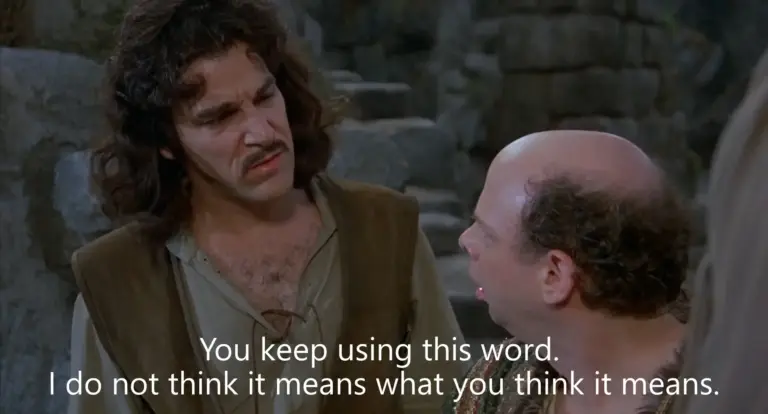
So, if you and your loved one are having a conflict about the same thing for the thousandth time, pause. Ask yourself: Does this conversation really mean what I think it means?

Photo: Inigo Montoya in The Princess Bride, via Disney+

If you discover a discrepancy between the situation and the reaction, lead with curiosity. The feelings are coming from somewhere real, even if it isn’t obvious at first. Then, use your emotional regulation skills to ground yourself in the present moment. Once you understand the meaning you’re making out of the content, validate yourself. Your emotions make sense! And finally, if the person you’re in conflict with is safe enough, have a conversation with them about what you’ve uncovered. In next month’s blog post, Karis will explore how to effectively communicate with your loved ones – stay tuned!

Want some guidance and support as you explore your meaning-making and time-travelling tendencies? One of our expert therapists would love to come alongside you.

Do you and your partner need an outside party to help you navigate the meaning you’re both making of your conflicts? Couples counseling might be a beneficial way forward.

Is your family stuck in cycles of conflict and underlying meaning-making? Our holistic approach to Whole Family Healing can help you understand each other more deeply.

Kiki Leonard, AMFT

Kiki Leonard brings passion and compassion to her role as a Marriage and Family Therapist Associate. She graduated from Richmont Graduate University with a Master’s degree in Clinical Mental Health Counseling and a Certificate in Marriage and Family Therapy. She is trained in Brainspotting, Internal Family Systems (parts work), Attachment-Based Family Therapy, and Emotionally Focused Therapy (Externship). 

Kiki loves helping individuals and couples to heal and break free from unhealthy patterns. She also helps families grow closer and overcome obstacles through Waystone’s Whole Family Healing approach. In her spare time, Kiki enjoys reading, going to fan conventions, and doing aerial silks. She also loves spending time with her people as well as snuggling and playing with her dog.

Boundaries Are Love: For Yourself and Others

June 27, 2025 | Karis Rodila, LPC, LMFT

Boundaries Are Love: For Yourself and Others

There’s a quote I came across that stopped me in my tracks when I first read it: 

“Boundaries are the distance at which I can love you and me simultaneously.”
           – Prentis Hemphill 

This really made me think. How are boundaries loving? How is distance good for a relationship? It seemed counterintuitive to me. However, as I sat with this statement more, it began to make sense. 

What Boundaries Actually Are

Imagine going to the zoo with your family or friends. You’re enjoying the day, looking at all the amazing animals. However, you notice that the fences around the animal enclosures are simple chain-link. It doesn’t bother you too much when looking at the zebras or even the giraffes, but when you get to the tigers, lions, and bears (oh my!), you begin to feel uncomfortable and unsafe. You can no longer be present with the people around you or enjoy the animals because all you can think about is that flimsy fence separating you from a predator.  

Boundaries are the fences we build in our lives and relationships so that there is safety to enjoy them to the fullest. This is why boundaries are so essential. They are an important part of our relationships because they allow us to determine how much access we give to others. They also provide the personal power to set limits on that access.  

This doesn’t mean that setting boundaries is easy or comfortable. Quite the opposite. Setting boundaries is difficult, especially when we are not used to it. In fact, the people around us may not understand or may be angry that we’ve limited their access to us. However, when we feel empowered to set limits, we can show up in healthier ways because fear and resentment no longer control us. 

So, How Do We Set Good Limits?

For something to be a boundary, four qualities need to be met. In the therapy world, we call this The Boundary Filter:

  1. A boundary must keep me safe. (If it doesn’t, it’s not a boundary.) Safety also doesn’t mean that boundaries won’t hurt emotionally or negatively impact my relationships. This filter is about keeping myself physically safe and minimizing mental and emotional damage.
  2. I must be willing and able to follow through on holding the boundary. (If not, it’s not a boundary.) This means that I am willing to enact the consequences if my boundaries are crossed. It also means the consequence is something I am able to do because it’s in my personal power to do it.
  3. The boundary must be 100% in my control. (If it’s not, then it’s not a boundary). A boundary is not, “If you do ____ then I will make you ___.” I have no power or control to “make” anyone do anything. To believe otherwise is to disempower myself and stay stuck. Boundaries are all about my personal power and what I can do to keep myself safe, while also showing up as healthy as I can.
  4. A boundary can be kept even if the other person disagrees. (If not, it’s not a boundary.) If a boundary’s consequences are 100% in my control, it means I can hold my boundary even if the other person disagrees, is upset, or pushes back. Again, boundaries are all about my personal power and what I have control over. 

When to Set Boundaries

Now that we’ve covered the what, we can focus on the when. How do we know if we need to set boundaries with some people in our lives? There could be many signs that a boundary is needed.  

The most common indicator I see in my clients and in myself is resentment. If I begin to feel resentment towards someone for what they do or what they ask of me, I know I need to pause and pay attention. There is probably a boundary that is being crossed or a limit missing from the relationship. Other signs that boundaries are needed could be anxiety, fatigue, or not wanting to spend time with someone.  

Once you have the awareness that a boundary is needed, you must determine what it needs to be set around: yourself (your unhealthy coping) or them (others’ unhealthy behaviors). Your personal unhealthy coping might include people pleasing, taking responsibility for things and feelings that aren’t yours, over functioning in relationships to keep the other person happy, etc. Other people’s unhealthy behaviors include addiction patterns, victim mentality, demands on your time and energy, etc. 

Boundaries Aren't a Cure-All... But They Do Help!

Now here is the hard truth about boundaries: they aren’t necessarily going to make our pain go away. It’s probably going to hurt mentally and emotionally. They are going to change our relationships, and not always for the easier. They are going to cost us, because once we set the boundary, if it’s really a boundary, we give up the right to complain about the other person’s behavior. However, there are so many reasons to have hope.  

Boundaries do improve our lives and can improve our relationships. In practicing healthy relational limitations, we learn to trust ourselves and our personal power to keep ourselves safe. We can experience existing relationships differently. Additionally, we can form new relationships in healthier ways with healthier people who will honor and respect our limits. We can be more empowered to ask for what we need from others without demanding. And we can wisely observe whether someone else is healthy enough to honor our vulnerability. 

Stepping Into Your Power

Boundaries are both challenging and so lifegiving to us and our relationships. If you think that you would benefit from learning more about boundaries and how/when to set them, consider reaching out to a therapist. They will have resources to help you process and understand the importance of having your own voice and power.  

I also lead groups for individuals who struggle with codependency, a variety of behaviors that show up in relationships as a means of maintaining a sense of control in unhealthy or unpredictable situations. Typical signs of codependency include: people-pleasing, lack of boundaries, low sense of self, difficulty recognizing and expressing emotions, and a need for control. If you think you could benefit from the group, please feel free to send me an inquiry at karis@waystonelmft.com. 

Remember, boundaries are the means by which we love ourselves and others well. 

For some helpful tools and guidance with implementing boundaries in your personal life, consider talking to a therapist.

To join a community of like-minded people seeking to break patterns of codependence, consider our Codependency Group. 

Karis Rodila, LPC, LMFT

Karis Rodila studied psychology at Berry College and received her Master’s in Marriage and Family Therapy from Richmont Graduate University. She specializes in working with adolescents (16+) and adults navigating different life circumstances like trauma, anxiety, depression, life transitions, relationship challenges, and more. Karis works with individuals as well as couples, and she is passionate about coming alongside her clients to help them discover their personal power. In her free time, she enjoys drinking coffee, spending time with her friends, and reading books by her favorite author, Brandon Sanderson. Disclaimer: If you ask her about Sanderson, be prepared for a lengthy and impassioned conversation!

Maximize Your Therapy Investment

April 18, 2025 | Kiki Leonard, AMFT

Maximize Your Therapy Investment

Ah, tax season. This time of year, finances are front-and-center in our focus. Money is one of those funny topics that can stir up many feelings (namely: fear and anxiety) because it’s closely tied to our sense of security. It can be a sacrifice to invest financially in your mental health! For this reason, I thought it would be helpful to provide some tips on how to maximize your investment in your healing journey, so that you can be sure your money is being used wisely and effectively!

The Fit of Your Therapist

Research shows that one of the biggest determinants of therapy outcomes is the therapist themself. Each therapist has their own unique style of therapy, and there are tons of different approaches and techniques. This variability means that not every therapist is going to work well with you! Sometimes people just clash or don’t “vibe” well, which makes it difficult for you to be open and vulnerable – a central component for making progress on your mental health journey.

Tips for determining fit:
1. Shop Around

If you’re just starting your journey, don’t be afraid to “shop around” for a therapist or counselor with whom you genuinely feel comfortable! Most therapists offer free consultations, which are a great opportunity to get a feel for how well (or not) you can work together. Try a few on for size to find the best fit for you before committing!

  • Check out our checklist of suggested questions to ask when interviewing potential therapists.
2. Offer Feedback

If you’ve been working with a therapist and you’re not seeing the progress you want, or if there are some things about their style that rub you the wrong way, try having a transparent conversation with them. Most therapists will welcome the feedback. We would rather know directly that something feels off to you so we have a chance to address it. After all, your healing is our ultimate goal, and we want to help facilitate that journey, not get in the way!

3. Find a Better Fit

If you feel like your therapist just isn’t the one for you and having a conversation with them hasn’t helped, then it might be time to find someone who better fits your needs. While it can be intimidating to start with someone new, it’s better in the long run to have a therapist you work well with! Try asking your current therapist or another trusted source for referrals; this can give you a head-start in the “shopping around” process.

Consider the Frequency of Your Sessions

Meeting weekly, especially at the beginning of therapy, can really jump-start your healing journey. Because the relationship with your therapist is so critical for therapy outcomes, establishing good rapport and trust early on in the process makes for faster, more effective work in the long run.

Also, if you’re working through trauma, you might consider altering the frequency of your sessions – if you need to meet every other week instead of weekly, you can do that! Make sure you have the time and energy to do the work in session when you have to move toward hard things. Be willing to take the risk and move toward the difficulty – the only way out is through! And that takes effort. It might be helpful to set aside some energy according to the difficulty level.

Set Clear, Achievable Goals

One great way to get the most out of your therapy dollars is to set clear goals. Your therapist should help with this process – it’s best if it’s collaborative! And knowing what you’re both working towards is incredibly helpful for keeping therapy on track so you don’t waste time (and money) exploring topics that don’t relate to your goals. Having clear goals also helps you to monitor the progress you make, so you can really see the effects your time, money, and effort have on your life and relationships.

Communicate Openly with Your Therapist

Transparency with your therapist is key to getting what you want out of therapy. If your therapist doesn’t know what’s really going on, then they can’t help you address it. To really get the most out of your therapy investment, try being honest about what you’re experiencing, what you’re wanting out of therapy, and how therapy is going.

Of course, sometimes we aren’t ready to talk about things – and that’s okay. If you’re curious about how to move forward in therapy when vulnerability is a barrier, take a look at Louise’s blog post, “What If I Don’t Want to Talk About It?

Actively Engage in and Out of Sessions

When you genuinely participate in the therapy process, you increase the impact and value of your therapy investment. One way to do this is to write down thoughts and feelings beforehand or throughout the week as they come up. That way, you can walk into your session with an idea of what you want to address that day, or how your previous session has affected you.

Another great way to actively participate is to take notes in session. Then, review them later. If you’re working through deep or poignant issues, you might even keep a journal about your therapy experience. This is another helpful way to see how things have changed throughout your healing journey. You can also choose to share what you’re learning with a trusted friend or partner.

Apply What You Learn Outside of Sessions

Let’s say I wanted to learn how to play guitar. I go out and buy a pretty little acoustic, I make sure I have all the accessories I might need (picks, a strap, a tuner, a capo, etc.), and I even sign up for lessons. But then, the only time I actually play the guitar is during my lessons with my instructor once a week. You can probably imagine how slow my progress would be! Wouldn’t it be so much more effective if I were to practice outside of lessons? Even two to three times a week would get me so much further along.

The same concept applies to therapy. Research shows that another critical determinant of therapy outcomes is how diligently you apply what you learn in therapy to your everyday life. Just like with any skill you learn, practicing it for only an hour every week or two probably isn’t going to get you very far. This is why some therapists assign “therapy homework.” Homework provides structured opportunities to export what you talk about and build it into your life!

Be patient and persistent

Healing can take time. This is especially true when you’re addressing deep, long-standing wounds or trauma. Or when you’re unlearning patterns of behavior that have been part of your life for a long time. Borrowing wisdom from our old friends The Tortoise and The Hare, “slow and steady wins the race.” Be patient with yourself and with the process. And if you stick with it – staying engaged, transparent, and with the support of a trusted therapist to walk with you – your investment in therapy can reap remarkable changes that will stay with you for a lifetime.

Ready to Start Investing?

If you’re interested in starting your therapy journey, take a look at our therapists’ bios to see who you’re most drawn to.

If you’re unsure who would be the best fit for you or your family, fill out the form below, and someone from our team will be in touch with you.

To help you assess who is or isn’t a good fit for you, download our Questions to Ask Potential Therapists checklist.

Kiki Leonard, AMFT

Kiki Leonard brings passion and compassion to her role as a Marriage and Family Therapist Associate. She graduated from Richmont Graduate University with a Master’s degree in Clinical Mental Health Counseling and a Certificate in Marriage and Family Therapy. She is trained in Brainspotting, Internal Family Systems (parts work), Attachment-Based Family Therapy, and Emotionally Focused Therapy (Externship). Kiki loves helping individuals and couples to heal and break free from unhealthy patterns. She also helps families grow closer and overcome obstacles through Waystone’s Whole Family Healing approach. In her spare time, Kiki enjoys reading, going to fan conventions, and doing aerial silks. She also loves spending time with her people as well as snuggling and playing with her dog.